Latina Scalo terminal: the regional plan wants it for the cold chain
The Latina Scalo rail terminal, with three tracks of over 500 metres and two warehouses totalling more than 9,000 square metres, is not in operation: the Lazio regional mobility, transport and logistics plan provides for bringing it into service as a cold terminal for agri-food and pharmaceuticals. The nearest active terminals in Lazio are Pomezia-Santa Palomba and the private terminals of Frosinone and Ferentino.
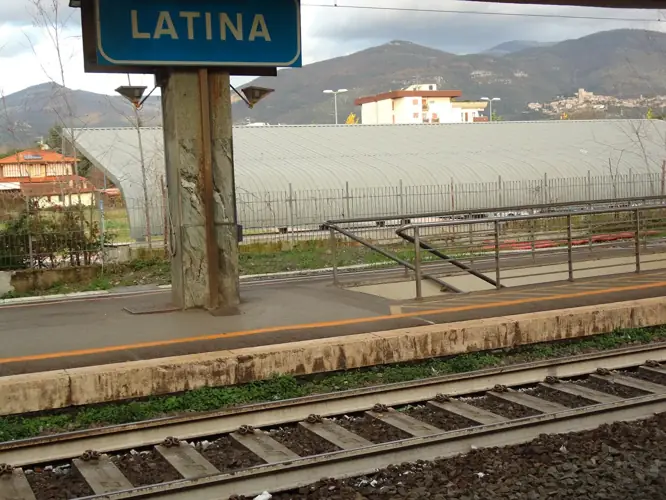
The Latina Scalo rail terminal, in the area of Latina station on the Rome-Formia-Naples line, is one of two freight terminals in Lazio that the regional mobility, transport and logistics plan (PRMTL) classifies as «al momento non operativi» (currently not in operation); the other is the ICPL in Civitavecchia. In its document «Il Sistema della Logistica», the Plan provides for bringing the terminal into service and describes its facilities: a set of three ground-level tracks over 500 metres long, two buildings to be used as warehouses with a total area of more than 9,000 square metres and extensive surrounding land. The specialisation indicated is that of a cold terminal for the chemical-pharmaceutical and agri-food chains of the province of Latina.
The state of the facility
According to the PRMTL, «l’infrastruttura logistica di Latina è già in piedi» (the Latina logistics infrastructure is already in place) but requires upgrading after its period of closure and a redefinition of its functional characteristics. The Plan specifies that, of the two terminals not in operation, only Latina has operated in the past.
On the rail side, the document does not foresee major works. The siding connects the terminal to Latina station with a curve radius of about 150 metres, which requires the first wagon always to be loaded, and has been dismantled for about 60 metres. According to the Plan, traffic on the Rome-Formia-Naples line is compatible with operating the terminal and, as there are no constraints involving traction providers or rail operators, shunting at the terminal takes place without shunting charges.
The focus: a cold terminal
The PRMTL links the terminal’s specialisation to the surrounding production areas. Two chains are identified, chemical-pharmaceutical and agri-food, «accomunate dall’esigenza del regime di refrigerazione» (sharing the need for refrigeration). The Plan refers to the presence of companies in these sectors with significant shipping volumes, including at international level, and to the proximity of Cisterna di Latina, Sermoneta, Sezze and Latina. More recent data confirm the weight of pharmaceuticals: according to the Frosinone-Latina Chamber of Commerce on ISTAT data, in 2025 the province of Latina exported pharmaceutical products worth 8.5 billion euros, 82% of its exports.
According to the Plan, the terminal could become a cold terminal «senza entrare in competizione» (without competing) with the yard planned at the MOF in Fondi or with Santa Palomba. The document also reports the position of the local production system of Pontine agri-food, which considers at least one platform for consolidation, storage and distribution of products to be necessary, and indicates that operators regard the Latina Scalo terminal as one of the most suitable sites.
To make the terminal viable, the PRMTL lists services to accompany rail operations: customs assistance, maintenance of road vehicles and loading units, parking areas for vehicles and storage areas for goods, with possible partnerships with local companies, operators or freight forwarders. The original project already included facilities for processing, packing, storage and distribution of chemical, pharmaceutical and agri-food products, which were never built.
The conditions set by the Plan
The PRMTL indicates as a first step a market survey to verify whether a critical mass of traffic can be reached. The restart of the Latina and Fondi terminals is placed in the medium term, as a study of the reactivation of «due ulteriori scali ferroviari strategici nel lungo periodo» (two further strategic rail terminals in the long term). If the terminal did not reach critical mass on its own, or if the MOF yard were not built, the Plan envisages concentrating the two shares of demand at the Latina node alone. The document gives no dates or amounts.
By road, the terminal can be reached from the SS148 Pontina and the SS7 Appia, while the SS156 Monti Lepini road links it to the Frosinone motorway junction. The Plan proposes upgrading the local roads, in particular Strada della Chiesuola, Viale delle Industrie, Via Conca and Strada Podgora, until the link road between Cisterna di Latina and the A1 is built; construction started in October 2026.
Active terminals in Lazio
The PRMTL describes a regional logistics offer that is «fortemente polverizzata» (highly fragmented). The main active rail terminals are as follows.
Pomezia-Santa Palomba. It is the largest terminal in Lazio by intermodal transport unit (ITU) traffic, with about 60,000 ITUs a year, and the main reference terminal for dangerous goods, partly because of the proximity of the chemical-pharmaceutical cluster. It has 6 intermodal and 5 conventional tracks on about 132,000 square metres and is operated by a company of the Ferrovie dello Stato group, named in the PRMTL as S.G.T. Spa; on the current FS Logistix page the facility comes under Mercitalia Shunting, which has invested 5.3 million euros there over the last three years; the group has set up a working group to plan future works. The ZLS Plan gives an indicative traffic of 2,080 train pairs a year. The problems identified by the PRMTL are road access, limited to the Pontina and the Ardeatina and, on the final stretch, Via Giuseppe Fiorucci, and the crossing of the Rome rail node. For expansion, the Plan identifies an undeveloped area of about 285,000 square metres south of the facility. The terminal is in Santa Palomba, a district of Pomezia.
Frosinone and Ferentino. The Frosinone terminal, owned by the Cianfrocca Group, occupies about 92,000 square metres and has a private siding to Frosinone station, also used by the Ferentino terminal run by TOTI Trans. Ferentino has 6 tracks of 400 metres and one track of 520 metres running into the warehouse of about 38,000 square metres, on a terminal of about 135,000 square metres. In 2021 Malpensa News reported the launch of an intermodal service between Ferentino and the Busto Arsizio-Sacconago terminal, with three trips a week.
Other facilities. The PRMTL cites the Piedimonte San Germano terminal, run by Compagnia Ferroviaria Italiana on about 158,000 square metres, and the Anagni logistics park, run by DGL on about 230,000 square metres. Roma Smistamento, operated by the same company as Santa Palomba, covers about 29,000 square metres. The rail section of the Orte Interporto was nearing completion, with a 12,000 square metre warehouse. Construction of the Frosinone Interporto, on the other hand, has been abandoned, with the management company in liquidation.
The Latina Scalo site
Consorzio Logistico Latina Scalo operates in Via della Dinamica, in the Tor Tre Ponti area of Latina Scalo, the district that is home to Latina station. The site does not have its own rail siding: goods arrive and leave by road, with 25,000 square metres of yards for manoeuvring articulated lorries, covered loading bays and storage, handling and transport services. Santa Palomba, where the intermodal terminal is located, is about 54.8 kilometres from the site by road according to the OSRM route calculation for cars. The location page gives road access details and up-to-date distances.
Sources
- Regione Lazio, PRMTL – Il Sistema della Logistica (pp. 6, 16-17, 33-37, §4.1.2): https://www.regione.lazio.it/sites/default/files/2022-11/Il-Sistema-Logistica.pdf
- Piano di Sviluppo Strategico ZLS Lazio (Santa Palomba terminal): https://politichecoesione.governo.it/media/pixdvzjt/piano-di-sviluppo-stratetegico.pdf
- FS Logistix, «Pomezia Terminal, a Strategic Hub for Intermodal Freight Traffic»: https://www.fslogistix.com/en/media/pomezia-terminal.html
- Malpensa News, on new intermodal traffic between the Sacconago and Ferentino terminals (July 2021): https://www.malpensanews.it/2021/07/nuovo-traffico-intermodale-tra-i-terminal-di-sacconago-e-ferentino-tre-viaggi-a-settimana/864461/
- Camera di Commercio Frosinone-Latina, «Frosinone e Latina sui mercati internazionali – Anno 2025»: https://www.frlt.camcom.it/sites/default/files/contenuto_redazione/Osserfare/Frosinone%20e%20Latina%20sui%20mercati%20internazionali%20Anno%202025%20revMR.pdf
- Giornale del Lazio, «Partiti i lavori della Cisterna-Valmontone» (25 October 2026): https://www.giornaledellazio.it/partiti-i-lavori-della-cisterna-valmontone/
- Wikipedia, Stazione di Latina: https://it.wikipedia.org/wiki/Stazione_di_Latina