Pontine pharmaceuticals, 8.5 billion euros of exports: the logistics requirements
In 2025 the province of Latina exported pharmaceutical products worth 8.5 billion euros, 82% of its exports, ranking second in Italy after Florence according to the Frosinone-Latina Chamber of Commerce on ISTAT data. The chain between Aprilia, Cisterna, Latina and Pomezia works to the European Good Distribution Practice guidelines, which set precise requirements for warehouses and transport.
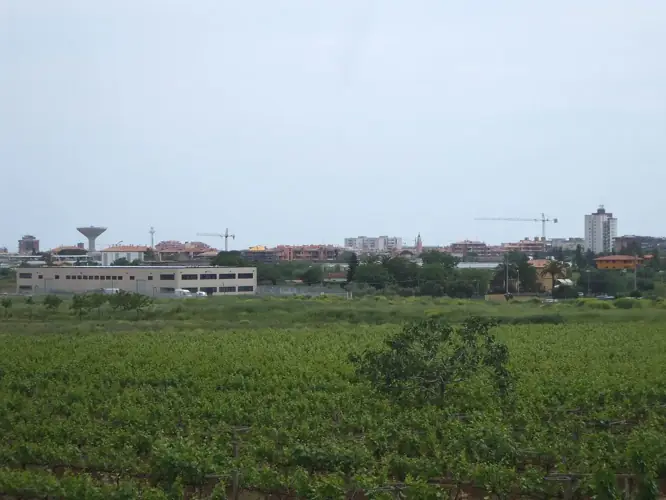
In 2025 the province of Latina exported pharmaceutical, medicinal chemical and botanical products worth 8,515 million euros, 82.3% of its sales abroad, making it the second Italian province for exports in the sector after Florence. The figure comes from the report «Frosinone e Latina sui mercati internazionali – Anno 2025» by the economic observatory of the Frosinone-Latina Chamber of Commerce, based on ISTAT data. Frosinone ranks fourth with 7.5 billion euros. According to the Chamber, the two provinces account for about 12% and 11% respectively of national pharmaceutical exports. For logistics in the province of Latina, the sector is the main generator of export flows.
Export figures for 2025
According to the Chamber’s report, total exports from the province of Latina exceeded 10 billion euros in 2025, growing by 2.4% after +27.2% in 2024. The pharmaceutical component grew by 1.8%, after +32.8% the previous year, and also accounts for 79% of provincial imports. Nationally, pharmaceutical exports came close to 70 billion euros, up 28.5%.
The weight of southern Lazio is also clear at regional level. According to the Chamber, pharmaceuticals account for 50% of Lazio’s industrial exports, and 90% of the region’s pharmaceutical exports come from the provinces of Latina and Frosinone, for a total of about 16 billion euros. Together, Latina and Frosinone account for 55.7% of Lazio’s total exports.
The geographical distribution of flows shows where the goods move. 88% of Pontine exports go to Europe. The first market is Belgium, with 5.3 billion euros of manufactured goods, 53% of flows to Europe: the Chamber describes it as a «destinazione logistica dei prodotti delle grandi multinazionali farmaceutiche» (logistics destination for the products of the large pharmaceutical multinationals). It is followed by the Netherlands (963 million euros, +14.8%), the United States (907 million, -34.5% after doubling in 2024) and Germany (584 million, +31.4%).
Companies and production sites
The Strategic Development Plan of the Lazio ZLS (Simplified Logistics Zone) identifies for area LAZ4, which includes Aprilia, Cisterna di Latina, Latina and Pontinia, a specialisation in the «fabbricazione di medicinali e preparati farmaceutici» (manufacture of medicines and pharmaceutical preparations), and cites for Cisterna and Latina companies such as Nuova Ompi (Stevanato Group), BSP Pharmaceuticals and Plasta Rei. For Pomezia the same Plan describes a chemical-pharmaceutical cluster with ACS Dobfar, Alfasigma and Menarini Biotech.
Some data on individual sites is public:
- AbbVie, at Campoverde di Aprilia: in 2016 AIFA (the Italian Medicines Agency) announced a new production line at the site for immunology, oncology and hepatitis C drugs, and certified its compliance with quality standards;
- Janssen (Johnson & Johnson), in Latina: according to a company press release of 2015, production capacity had risen from 1.8 billion tablets a year in 2010 to 4 billion in 2015;
- BSP Pharmaceuticals, in Latina Scalo: in 2015 Invitalia, the Lazio Region and the company signed a 38.2 million euro development contract to expand the oncology drugs plant, with a new sterile production unit;
- Alfasigma, in Pomezia: in July 2026 the company presented to the Region an investment plan of more than 40 million euros for 2026-2027 at the site, which employs more than 500 people.
The industrial areas of the Consorzio Industriale del Lazio give the scale of the production areas: Aprilia 256 hectares, Cisterna di Latina 368 hectares, Latina Scalo 448 hectares, Santa Palomba 483 hectares between Rome and Pomezia.
Good Distribution Practice (GDP)
The distribution of medicinal products for human use in the European Union follows the Commission guidelines of 5 November 2013 on Good Distribution Practice (GDP), published in the Official Journal of the EU as 2013/C 343/01 on the basis of Articles 84 and 85b of Directive 2001/83/EC. In Italy the framework is completed by Legislative Decree No 219 of 24 April 2006, whose Title VII governs the wholesale distribution of medicines and the related authorisation.
The guidelines are organised in ten chapters: quality management, personnel, premises and equipment, documentation, operations, complaints and returns (including falsified medicines and recalls), outsourced activities, self-inspections, transportation and specific provisions for brokers. For a warehouse, the points with the greatest practical impact are these:
- responsible person. The distributor appoints a person responsible for the quality system, with appropriate competence and experience;
- premises and temperature. Storage areas must maintain the conditions prescribed for the products. Before use, an initial temperature mapping exercise must be carried out under representative conditions, as an AIFA presentation on GDP also points out; temperature must then be monitored and recorded with calibrated instruments;
- segregation. Products in quarantine, returned, rejected, recalled or suspected of being falsified must be physically segregated or kept apart by equivalent electronic systems;
- traceability and documentation. Every operation must be recorded so that the path of batches can be reconstructed, with stock rotation based on expiry dates;
- outsourced activities. When storage or transport is entrusted to third parties, the contract giver remains responsible and must govern the relationship through a written contract and audit the provider;
- transportation. The distributor must ensure that storage conditions are maintained during transport, with checks on vehicles and procedures for temperature excursions.
GDP is not a voluntary certification: it is the reference against which the authorities inspect those who hold and distribute medicines. Authorisation for wholesale distribution is granted by the competent authorities under Legislative Decree 219/2006, and the pharmaceutical client must qualify every logistics operator to which it entrusts activities within that scope.
Reference infrastructure
For intermodal flows the nearest node is the Pomezia-Santa Palomba terminal. The Lazio PRMTL (regional mobility, transport and logistics plan) identifies it as the region’s largest terminal by intermodal transport units (about 60,000 a year) and as the «principale scalo di riferimento» (main reference terminal) for dangerous goods, partly because of the proximity of the chemical-pharmaceutical cluster. The same regional Plan identifies for the Latina Scalo terminal, currently not in operation, a role as a cold terminal for the chemical-pharmaceutical and agri-food chains.
On the maritime side, the ZLS Plan notes the tendency of the Pomezia and Latina pharmaceutical industry to look to Civitavecchia as its natural port, partly because of the port’s cold chain potential. The weight of Belgium as a destination market, on the other hand, indicates a significant share of intra-European flows, handled by road to the multinationals’ distribution centres.
The Latina Scalo site
Consorzio Logistico Latina Scalo, in Via della Dinamica, Latina Scalo, has 19,000 square metres of covered space, temperature-controlled storage areas and a WMS for warehouse management, with storage, handling and document management services with traceability. By road the site is about 14.8 kilometres from Cisterna di Latina and 33.5 kilometres from Aprilia. The facilities stated by the Consorzio do not include specific authorisations for the distribution of medicines, which for activities subject to GDP must be checked with the client case by case. An overview of the sectors served is on the sectors page.
Sources
- Camera di Commercio Frosinone-Latina, Osserfare, «Frosinone e Latina sui mercati internazionali – Anno 2025» (ISTAT data): https://www.frlt.camcom.it/sites/default/files/contenuto_redazione/Osserfare/Frosinone%20e%20Latina%20sui%20mercati%20internazionali%20Anno%202025%20revMR.pdf
- Camera di Commercio Frosinone-Latina, Pillole economiche – Focus export, April 2026: https://www.frlt.camcom.it/sites/default/files/contenuto_redazione/Osserfare/1_Pilloleconomiche%20EXPORT%202026.pdf
- Piano di Sviluppo Strategico ZLS Lazio (LAZ4 and Pomezia sheets): https://politichecoesione.governo.it/media/pixdvzjt/piano-di-sviluppo-stratetegico.pdf
- Consorzio Industriale del Lazio, industrial areas: https://www.consorzioasi.com/agglomerati-industriali/
- Italpress, on Alfasigma’s investment plan for the Pomezia site (20 July 2026): https://www.italpress.com/farmaceutica-da-alfasigma-un-nuovo-piano-di-investimenti-per-il-polo-di-pomezia/
- Johnson & Johnson, Polo Janssen di Latina, new continuous manufacturing line (2015): https://www.jnj.com/innovativemedicine/italy/sala-stampa/news/polo-janssen-di-latina-sostenibilita-e-innovazione-tecnologica-grazie-alla-nuova-linea-produzione-in-continuo
- Quotidiano Sanità, on the 38.2 million euro investment by Invitalia, Regione Lazio and BSP Pharmaceuticals in Latina (2015): https://www.quotidianosanita.it/scienza-e-farmaci/invitalia-regione-lazio-e-bsp-pharmaceuticals-investono-milioni-a-latina/
- AIFA, «Pani: investimento AbbVie conferma eccellenza italiana» (20 January 2016): https://www.aifa.gov.it/-/pani-investimento-abbvie-conferma-eccellenza-italiana
- European Commission, Guidelines on Good Distribution Practice of medicinal products for human use (2013/C 343/01): https://eur-lex.europa.eu/legal-content/IT/TXT/?uri=CELEX:52013XC1123(01)
- AIFA, presentation on GDP and temperature mapping: https://www.AIFA.gov.it/documents/20142/1180150/2018-05-24_GALLICCIA_IMP&GDP.pdf
- D.Lgs. 24 aprile 2006, n. 219 (AIFA text): https://www.aifa.gov.it/sites/default/files/d.lgs_.n._219_2006_e_s.m.i..pdf
- Regione Lazio, PRMTL – Il Sistema della Logistica: https://www.regione.lazio.it/sites/default/files/2022-11/Il-Sistema-Logistica.pdf