Agri-food logistics in Latina and south of Rome
Storage, handling and distribution for the agri-food supply chain in Latina Scalo: 19,000 square metres covered, temperature-controlled areas.
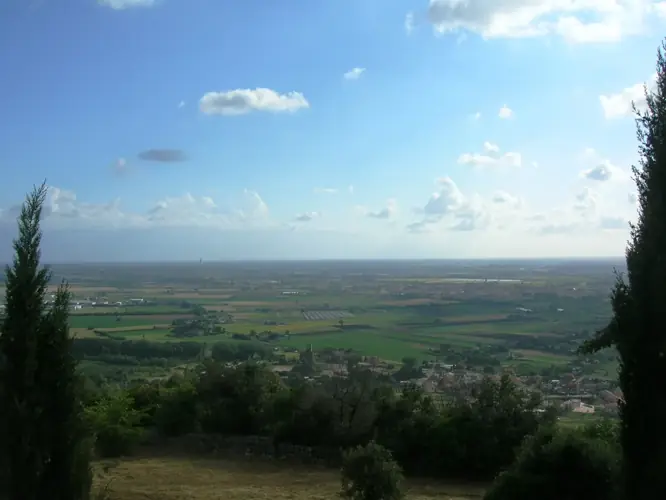
Consorzio Logistico Latina Scalo operates a logistics hub on Via della Dinamica, in the Tor Tre Ponti area of Latina Scalo (LT), with 19,000 square metres of covered space and 25,000 square metres of open areas, which also serves agri-food businesses in the province of Latina and the southern quadrant of Rome. The consortium brings together five companies with more than 50 years of combined experience and provides storage, handling and road transport through a single point of contact.
The Pontine agri-food sector
The Agro Pontino was among the first areas in Italy to host specialised kiwifruit orchards, as early as the 1970s. Kiwi Latina PGI, recognised by the European Union in 2004, is produced in municipalities of the provinces of Latina and Rome under a product specification that sets varieties and maximum yields per hectare.
The second reference point for the sector is the Centro Agroalimentare all’Ingrosso di Fondi (MOF), classified as an agri-food market of national interest. According to its operator, the MOF handles almost 10 million quintals (about 1 million tonnes) of goods a year and has a central cold store and temperature-controlled logistics platforms. The MOF is about 56 km by road from Latina Scalo.
On the infrastructure side, the Lazio regional mobility, transport and logistics plan provides for the reopening of the Latina Scalo rail terminal, currently not in operation, and identifies it as a candidate terminal for temperature-controlled, agri-food and pharmaceutical supply chains. For sea freight, Civitavecchia is the main port in Lazio, with Ro-Ro traffic and a growing role in cold-chain cargo.
Road connections
Latina Scalo can be reached from the SS148 Pontina and the SS7 Appia; the SS156 dei Monti Lepini links Latina to Frosinone and the A1 motorway network. Road distances from the site are about 8 km to central Latina, about 38 km to Terracina, about 56 km to Fondi and about 50 km to Pomezia. Rome EUR is about 70 km away by road.
Operations available for agri-food
The consortium carries out the following activities for clients in the sector, all on the same site:
- goods receipt and storage on industrial racking, in modular warehouses of 500 to 3,000 square metres with clear heights of up to 10 metres, set up for pallet racking;
- storage in temperature-controlled areas, with conditions to be agreed for each item;
- handling: picking, packing, labelling and palletising;
- cross-docking, for flows that pass through the covered loading bays without being held in stock;
- road transport with a dedicated fleet, B2B deliveries across Italy and last-mile distribution;
- document management: transport documents (DDT), delivery notes, movement traceability and integration with the client’s management systems.
The warehouse runs on a WMS (warehouse management system), with dedicated fibre-optic connectivity and industrial Wi-Fi. The site has perimeter video surveillance, access control, and fire and intrusion protection systems. The consortium states that it operates 24 hours a day, 7 days a week, which is relevant for receipts linked to harvest peaks.
The yards for articulated-lorry manoeuvring and the parking areas allow several vehicles to be handled at the same time. The open areas, 25,000 square metres, can hold empty packaging, harvest bins and equipment.
Sector regulations and requirements
Food logistics is governed by European rules that apply to all operators in the chain, including warehouses and carriers:
- Regulation (EC) No 178/2002 establishes the traceability requirement for food, with identification of the supplier and recipient of each consignment;
- Regulation (EC) No 852/2004 on the hygiene of foodstuffs requires self-monitoring procedures based on HACCP principles, as well as requirements for premises, equipment and means of transport;
- Regulation (EC) No 853/2004 lays down specific rules for food of animal origin, including storage temperatures;
- Regulation (EU) No 1169/2011 governs food information to consumers, which is relevant to any labelling work on food products;
- the transport of perishable foodstuffs under controlled temperature is subject to the ATP agreement, which covers vehicle approval.
The consortium does not state any specific food-sector certifications on this page. Self-monitoring procedures, temperature ranges, recording frequency and vehicle types are requirements to be verified at the quotation stage, based on the product category and the client’s specifications.
Requesting a quotation
For a quotation, state the type of product (ambient, fresh, fruit and vegetables, processed), the required temperature conditions, the number of pallets or square metres needed, the duration and seasonality of storage, the frequency of receipts and dispatches, delivery destinations and any labelling or palletising work. Requests can be sent via the contact form.
Further reading
- Services: storage, cross-docking, transport
- Locations: Latina, Fondi, Terracina
- Areas: province of Latina, Rome South
Sources
- Disciplinare del Kiwi Latina IGP, DM Mipaaf 27/02/2018: https://www.unionalimentari.com/wp-content/uploads/2024/09/Mipaaf-27.2.2018-disciplinare-Kiwi-LatinaCOMPL.pdf
- ARSIAL, scheda Kiwi Latina IGP: https://www.arsial.it/wp-content/uploads/2025/06/KiwiLatinaIGP.pdf
- MOF Fondi, operator’s presentation: https://www.mof.it/index.php/mof
- Regione Lazio, PRMTL, “Il Sistema della Logistica”: https://www.regione.lazio.it/sites/default/files/2022-11/Il-Sistema-Logistica.pdf
- AdSP del Mar Tirreno Centro-Settentrionale, 2025 traffic figures: https://portidiroma.it/sites/default/files/allegati/Traffici%20AdSP%20del%20Mar%20Tirreno%20Centro%20Settentrionale%20-%20Anno%202025.pdf