Logistics for grocery retail chains between Latina and south Rome
Storage, cross-docking and deliveries to stores and grocery distribution centres from Latina Scalo, about 55 km by road from the Santa Palomba platforms.
Consorzio Logistico Latina Scalo operates a logistics hub in Latina Scalo (LT), on Via della Dinamica in the Tor Tre Ponti area, with 19,000 square metres of covered space and 25,000 square metres of open areas, serving manufacturers and distributors that supply large retail chains (GDO, grande distribuzione organizzata) and retail in the province of Latina and the southern quadrant of Rome. The consortium, made up of five companies, manages storage, cross-docking and transport through a single point of contact.
The south Rome distribution hub
Santa Palomba, a district of Pomezia, is one of the main logistics hubs in Lazio: it hosts logistics operators and platforms of large retail chains. The Pomezia–Santa Palomba intermodal terminal ranks first in Lazio by intermodal transport units handled.
Latina Scalo is a separate area from this hub and lies about 55 km by road from Santa Palomba and about 50 km from Pomezia. For a retail-chain supplier with production or stock in the province of Latina, the site can serve as an intermediate warehouse between production and customers’ distribution platforms.
Connections and distances
Latina Scalo can be reached from the SS148 Pontina and the SS7 Appia; between Rome and Latina (Borgo Piave) the Pontina is a dual carriageway with two lanes in each direction. The SS156 dei Monti Lepini links Latina to Frosinone and the A1 motorway network.
Road distances to delivery areas are about 8 km to central Latina, about 15 km to Cisterna di Latina, about 34 km to Aprilia, about 38 km to Terracina, about 56 km to Fondi and about 70 km to Rome EUR. Journey times for heavy goods vehicles are longer than by car.
Operations available
For suppliers to grocery and retail chains the consortium carries out:
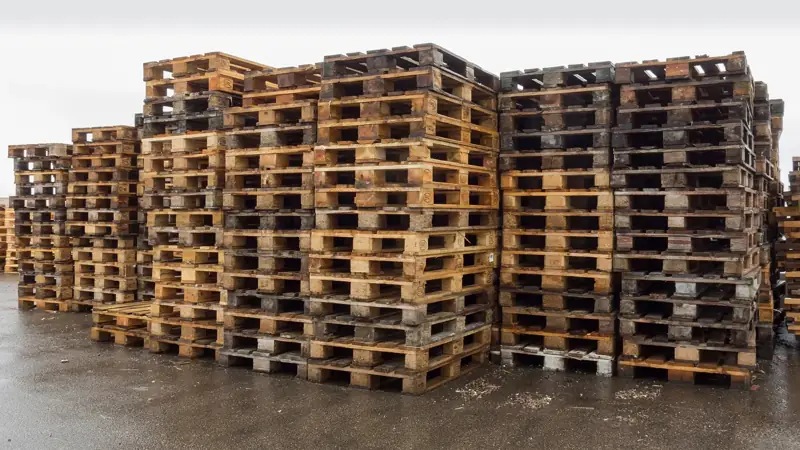
- storage on industrial racking, in modular warehouses of 500 to 3,000 square metres with clear heights of up to 10 metres, set up for pallet racking;
- temperature-controlled storage areas, with conditions to be agreed;
- cross-docking, with goods moving from receiving bays to dispatch bays without going into stock;
- picking and palletising in accordance with distribution centre specifications;
- labelling of unit loads and parcels, including the logistics labels required by customers;
- road transport with a dedicated fleet, B2B deliveries across Italy and last-mile distribution to stores;
- document management: transport documents (DDT), delivery notes, traceability and integration with the client’s management systems.
The yards allow articulated lorries to manoeuvre and vehicles to wait; the loading and unloading bays are covered. The warehouse runs on a WMS (warehouse management system), with dedicated fibre-optic connectivity and industrial Wi-Fi. The site has perimeter video surveillance, access control, and fire and intrusion protection systems. The consortium states that it operates 24 hours a day, 7 days a week, a factor to consider when specifications require night-time or early-morning deliveries.
Sector regulations and requirements
Supplying large retail chains combines legal requirements with the contractual requirements of distributors:
- food products are subject to Regulation (EC) No 178/2002 on traceability, Regulation (EC) No 852/2004 on hygiene, with procedures based on HACCP principles, and Regulation (EU) No 1169/2011 on consumer information, which is relevant to any relabelling;
- for non-food products, Regulation (EU) 2023/988 on general product safety requires every product to be traceable along the supply chain;
- distribution centres normally set out in their specifications the delivery windows, slot booking, pallet format, maximum height of unit loads and logistics labels;
- pallet racking is subject to standard UNI EN 15635 within the framework of Legislative Decree (D.Lgs.) 81/2008.
The consortium does not state on this page any sector certifications or the temperature ranges of the controlled areas. Food self-monitoring procedures, temperature conditions and compliance with the specifications of individual distributors are to be verified at the quotation stage.
Requesting a quotation
For a quotation, state the type of product, storage conditions, the number of pallets or parcels handled per month, the share of goods in cross-docking and in stock, the list of distribution centres and stores to be served, customers’ logistics specifications and the promotions calendar. Requests can be sent via the contact form.
Further reading
- Services: cross-docking, transport, storage
- Locations: Santa Palomba, Pomezia, Aprilia
- Areas: province of Latina, Rome South
Sources
- Piano di Sviluppo Strategico ZLS Lazio, pp. 35–36 and 51–52: https://politichecoesione.governo.it/media/pixdvzjt/piano-di-sviluppo-stratetegico.pdf
- Consorzio Industriale del Lazio, agglomerati industriali: https://www.consorzioasi.com/agglomerati-industriali/
- Regione Lazio, PRMTL, “Il Sistema della Logistica”: https://www.regione.lazio.it/sites/default/files/2022-11/Il-Sistema-Logistica.pdf