Textile and fashion logistics in Latina and south Rome
Storage, picking and labelling for textiles and fashion in Latina Scalo: 19,000 square metres covered, deliveries to stores in south Rome and Lazio.
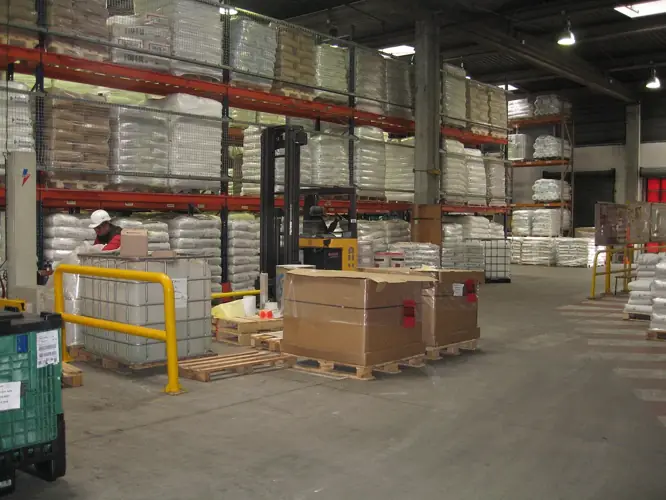
Consorzio Logistico Latina Scalo operates a logistics hub in Latina Scalo (LT), on Via della Dinamica in the Tor Tre Ponti area, with 19,000 square metres of covered space and 25,000 square metres of open areas, which textile and fashion manufacturers, distributors and brands can use for the storage and distribution of finished garments and accessories. The consortium, made up of five companies with more than 50 years of combined experience, manages storage, order preparation and transport through a single point of contact.
Location and delivery areas
Latina Scalo lies on the Tyrrhenian corridor between Rome and Naples and can be reached from the SS148 Pontina and the SS7 Appia. Between Rome and Latina (Borgo Piave) the Pontina is a dual carriageway with two lanes in each direction.
Road distances from the site to the main sales areas are about 8 km to central Latina, about 34 km to Aprilia, about 50 km to Pomezia, about 57 km to Castel Romano and about 70 km to Rome EUR. To the south, Terracina is about 38 km away and Formia about 74 km. Journey times for heavy goods vehicles are longer than by car.
For air freight, Fiumicino airport is about 90 km away by road.
In textiles, flows follow the collection calendar: receipts concentrated before the start of the season, replenishment during the selling period and end-of-line returns. Planning for these peaks, together with the space to be allocated, is agreed with the client at the quotation stage. The consortium acts as a third-party logistics (3PL) provider, with a single point of contact for receipt, storage, order preparation and transport.
Operations available
For the textile and fashion sector the consortium carries out:
- goods receipt from suppliers and workshops, with checking of transport documents;
- storage of boxed flat-packed garments and accessories on industrial racking, in modular warehouses of 500 to 3,000 square metres with clear heights of up to 10 metres;
- picking by size and colour, to make up orders for stores, showrooms and B2B customers;
- labelling according to the client’s instructions and packing of parcels;
- palletising of shipments to customers’ distribution centres;
- cross-docking for start-of-season deliveries, when goods pass directly from receipt to dispatch;
- road transport with a dedicated fleet, B2B deliveries across Italy and last-mile distribution;
- document management: transport documents (DDT), delivery notes, traceability and integration with the client’s management systems.
The WMS (warehouse management system) records stock by item, a requirement for collections with many size and colour combinations. The site has perimeter video surveillance, access control, and fire and intrusion protection systems. The consortium states that it operates 24 hours a day, 7 days a week.
The temperature-controlled storage areas can be considered for materials sensitive to ambient conditions, such as leather goods or technical garments, with parameters to be agreed.
Sector regulations and requirements
Textile and fashion logistics involves several product rules, which remain the responsibility of the manufacturer or distributor but affect warehouse operations:
- Regulation (EU) No 1007/2011 governs textile fibre names and the composition labelling of textile products sold in the Union;
- Regulation (EU) 2023/988 on general product safety (GPSR) requires product traceability and, in the case of distance sales, lists fulfilment service providers among economic operators;
- Regulation (EC) No 1907/2006 (REACH) restricts the presence of certain substances in textile and leather articles;
- Legislative Decree (D.Lgs.) 206/2005 (Consumer Code) provides a 14-day right of withdrawal for distance purchases, with effects on return flows.
The consortium does not state on this page a hanging-garment system or structured returns management. Both activities are to be verified at the quotation stage, together with the quality control procedures required by the brand.
Requesting a quotation
For a quotation, state the type of product (flat-packed garments, hanging garments, footwear, accessories), the number of items and size-colour combinations, volumes per season, the number of stores or customers to be served, the work required, such as labelling or dedicated packing, and destinations. Requests can be sent via the contact form.
Further reading
- Services: handling, value-added services, cross-docking
- Locations: Rome EUR, Pomezia, Terracina
- Areas: province of Latina, Rome South
Sources
- Wikipedia, SS148 Pontina (ANAS data): https://it.wikipedia.org/wiki/Strada_statale_148_Pontina
- Regione Lazio, PRMTL, “Il Sistema della Logistica”, §3.1.7: https://www.regione.lazio.it/sites/default/files/2022-11/Il-Sistema-Logistica.pdf