Document management and WMS for logistics in Latina Scalo
Document management in Latina Scalo (LT): DDT and delivery notes, traceability of movements in the WMS and integration with the Consortium's clients' systems.
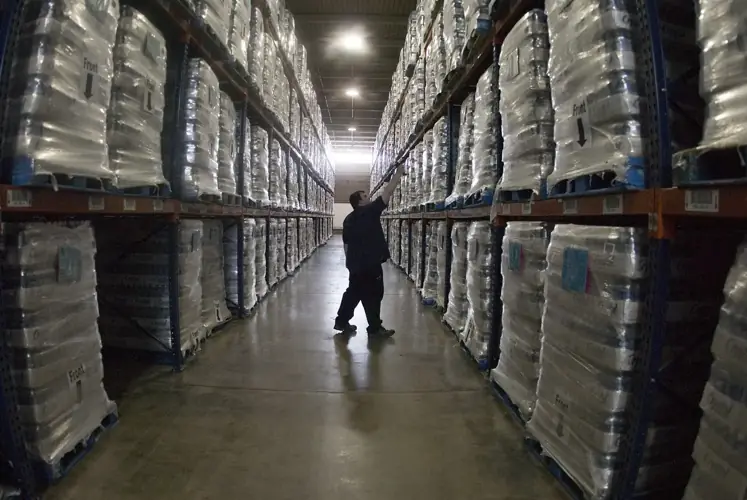
Documents, data and traceability in one service
On behalf of its clients, Consorzio Logistico Latina Scalo manages the documentation and information side of logistics: issuing transport documents (DDT, Italian delivery notes) and delivery notes, recording warehouse movements in the WMS (warehouse management system), traceability of load units and integration with clients’ management systems. The service accompanies the storage, handling and transport carried out at the Via della Dinamica site, Tor Tre Ponti area, Latina Scalo (LT).
At the site the WMS runs on a dedicated fibre-optic connection and industrial Wi-Fi in the warehouse areas; offices and meeting rooms house the staff who coordinate documents and information flows.
Transport documents and delivery notes
Inbound
On receipt, the operator checks the goods against the supplier’s DDT and the client’s advance shipping notice. Differences between declared and received quantities, and any damage, are noted as reservations on the carrier’s document and reported to the client with the delivery reference.
Outbound
On loading, the Consortium issues the transport document on behalf of the client, with consignee, description of goods, number of packages and weight. The copy signed by the consignee is returned to the Consortium at the end of the delivery, if carried out by the dedicated fleet, and filed together with the shipment data.
The WMS and traceability
Recording units
Each accepted load unit is recorded in the WMS and linked to item code, quantity and location. Where the client requires it, the record also includes the batch and expiry date, needed in the agri-food and pharmaceutical supply chains.
Movements
The system records every subsequent movement: put-away, replenishment of picking areas, order picking, value-added operations, loading. This makes it possible to reconstruct the path of a unit or batch from receipt to dispatch, information that is also useful in the event of a product recall or a dispute with a customer.
Inventory
Recorded stock is compared periodically with physical counts, according to the agreed schedule. Discrepancies are reported to the client with item, batch and location details.
Integration with management systems
Data exchange between the client’s management system (ERP) and the Consortium’s WMS normally covers four flows:
- master data: item codes, descriptions, packaging units, dimensions and weights;
- advance shipping notices: expected goods, with supplier, quantity and planned date;
- outbound orders: order lines, consignees and delivery dates;
- confirmations: completed receipts with any reservations, updated stock levels, dispatched shipments with document references.
File format, transmission channel and exchange frequency are defined in the start-up plan, based on the system used by the client. In the initial phases, or for small volumes, exchanges can also take place with standard files sent at agreed times.
Reporting
The client receives data on stock, receipts, dispatches and anomalies at the agreed intervals. Report content is set according to the client’s control requirements, for example item turnover, batches close to expiry or orders fulfilled per period.
Service start-up
Start-up comprises four steps: collection of master data and document formats; definition of data flows and responsibilities; testing of exchanges on a sample of orders; go-live with monitoring during the first weeks. The service is part of the third-party logistics (3PL) model and also applies to cross-docking and value-added services.
Sectors and territory
Batch traceability is particularly relevant to agri-food and pharmaceuticals; order integration is central to e-commerce and large-scale retail, while management of codes and variants concerns textiles and fashion and automotive. The site serves companies in Latina, Aprilia, Cisterna di Latina and Pomezia, as well as the wider province of Latina and the south of Rome.
Requesting a quote
For a document management quote, please state the management system in use, the data format the client can send and receive, the documents to be issued, the batch or expiry data to be tracked, the average number of orders per day and the required reporting frequency. Requests can be sent via the contact form.