Value-added warehouse services in Latina Scalo
Value-added services in Latina Scalo (LT): picking, packing, labelling and palletising; kitting and repacking assessed on request.
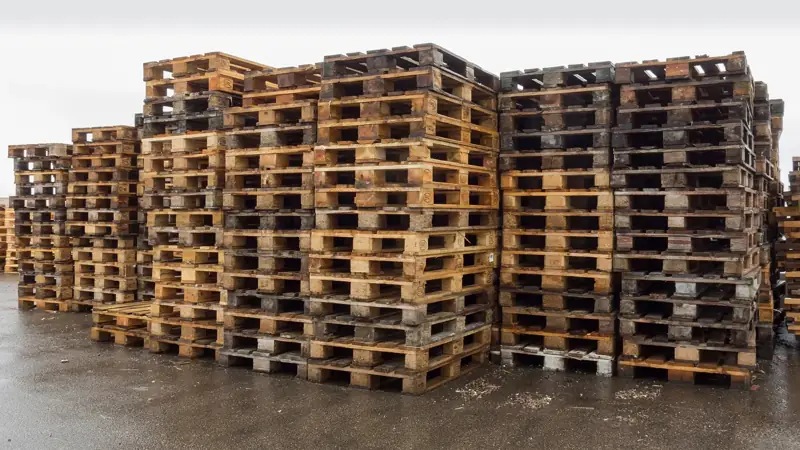
Operations on goods before dispatch
Consorzio Logistico Latina Scalo carries out value-added services on goods held in stock at the Via della Dinamica site, Tor Tre Ponti area, Latina Scalo (LT). Routine activities are picking, packing, labelling and palletising. More complex operations, such as kit assembly and repacking (co-packing), are assessed on request.
The work takes place in the same buildings where the goods are stored, 19,000 square metres of covered space in modules of 500 to 3,000 square metres. Goods are not transferred to another site between storage, processing and dispatch.
Routine operations
Picking
Picking builds orders from the locations recorded in the WMS (warehouse management system), by full pallet, case or item. The picking process is described in detail on the handling page.
Packing
Picked items are checked by code and quantity and packed according to the client’s instructions: choice of carton, void fill, insertion of documents or information material, sealing and identification of the package. For e-commerce shipments to end consumers, packaging is sized to the individual order.
Labelling
Labelling includes applying shipping labels and, on request, product or channel labels. Relabelling is used, for example, when the same goods are destined for customers or markets with different requirements. Label texts, codes and format are supplied or approved by the client.
Palletising
Outbound units are built on pallets according to the rules of the client or the consignee: maximum height, weight, stackability, arrangement of packages. The pallet is secured with stretch wrapping or strapping and identified with the shipping label. Palletising is required in particular by large-scale retail distribution platforms.
Operations on request
Kit assembly
Kitting combines different items in a single pack, for example a product with its accessories, a promotional pack or an assortment for a retail outlet. The client provides the kit bill of materials and, if necessary, the packaging materials.
Repacking (co-packing)
Repacking changes the original packaging: creating multipacks, replacing damaged packaging, inserting promotional material. For each activity a reference sample and work instructions are agreed.
For both operations feasibility is checked case by case, based on quantities, frequency, materials and required lead times.
Consignee requirements
Many distribution platforms set their own delivery rules: label format and position, pallet build, documents to be attached. The Consortium collects these specifications at start-up and turns them into work instructions for each consignee, so that outbound units are prepared in line with the platform’s receiving conditions.
The operating process
- Definition of the operation: the client describes the activity and provides written instructions, bills of materials and, where possible, an approved sample.
- Preparation of materials: packaging, labels and components are received, checked and recorded in the same way as incoming goods.
- Initial trial: the result is checked with the client on a first batch and processing times are estimated.
- Execution: the work is carried out in batches, with components picked from the warehouse and the quantities consumed and produced recorded in the WMS.
- Checking and dispatch: the finished product is checked for quantity and conformity with the sample, then stored or dispatched.
Sectors
Value-added services concern different supply chains: promotional packs for agri-food, labelling and repacking for textiles and fashion, component kits for automotive and manufacturing. For pharmaceuticals each operation must be assessed in advance against the product’s regulatory requirements.
Location
The site is about 8.4 km by road from Latina centre, 33.5 km from Aprilia, 49.8 km from Pomezia and 54.8 km from Santa Palomba. The Consortium states that it operates 24 hours a day, 7 days a week. The areas served are described on the pages on the province of Latina and the south of Rome.
Requesting a quote
For a value-added services quote, please state the type of operation, quantities per batch and frequency, materials supplied by the client, work instructions or reference sample, required checks and the delivery date for the processed goods. Requests can be sent via the contact form.